
Bluelearn Project
Discord members
~1,000
Online now
—
Volunteer hours
Founded
2026
Nonprofit (CA) pending
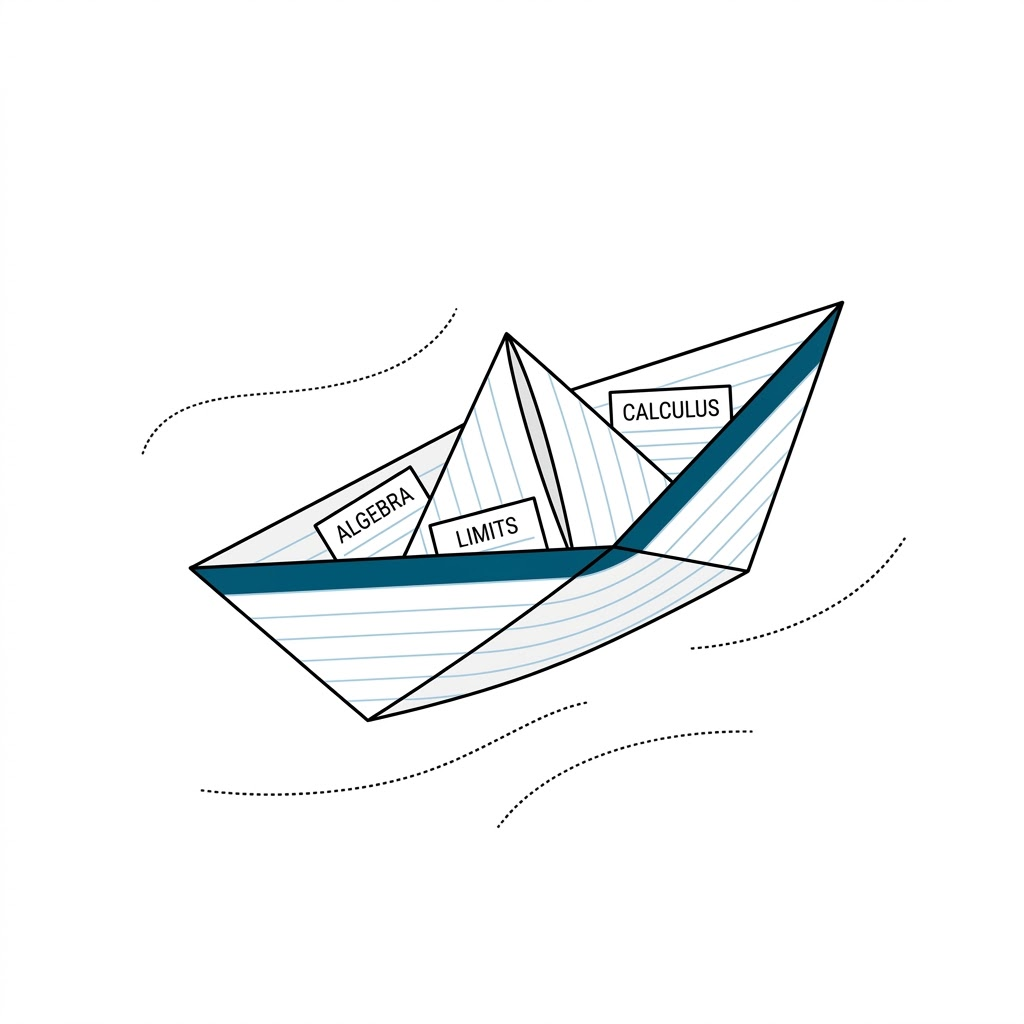
Free knowledge, structured from the ground up.
Bluelearn is a nonprofit, open-source platform where every concept maps to its prerequisites. Community-written, expert-verified*, and free forever.
Open Source
Docs
Start contributing Prerequisite graph Editorial standards Expert verification* Discord onboarding* Not required
Overview
See Bluelearn in 23 minutes.
What we're building, why open-source and nonprofit, and how the prerequisite graph changes how you read a concept page.
Knowledge has been organized for a long time. Just not for you.
Executive Compensation
A nonprofit testing org that pays its executives like a Wall Street bank.
Source: College Board IRS Form 990, FY ending June 30, 2022. $1.17B total revenue.
Textbook Pricing
College textbook prices rose more than three times faster than general inflation.
Source: U.S. BLS 1977–2015.
Paywall Economy
The researcher is unpaid. The peer reviewer is unpaid. The reader pays anyway.
Missing Structure
The parts that are free are not built to teach you anything comprehensively.
Take full control of how you learn
Built for learners, loved by contributors.
Concept-first articles
No sprawling chapters. One concept per page, with prerequisites and follow-ons declared up front.
A prerequisite graph
Every concept declares exactly what you need to know first. Hit a term you don't know and the platform offers the prerequisite immediately.
Open contribution
PRs for code. In-app editor for lessons. No markdown required. Edit history is public either way.
Expert verification*
Credentialed contributors carry a visible badge and can verify contributions to mark them as correct. The community votes; the clearest correct version rises to the top.
* Verification is optional. Lesson edits publish without it. Verification is the signal that a domain expert has reviewed the page for correctness, not a barrier to publish.
Calculus
Prerequisites
- Arithmetic
- Algebra
- Limits
Calculus is the mathematical study of continuous change. Two major branches: differential and integral.
Differential calculus concerns instantaneous rates of change and the slopes of curves.
Prerequisite map for
Calculus
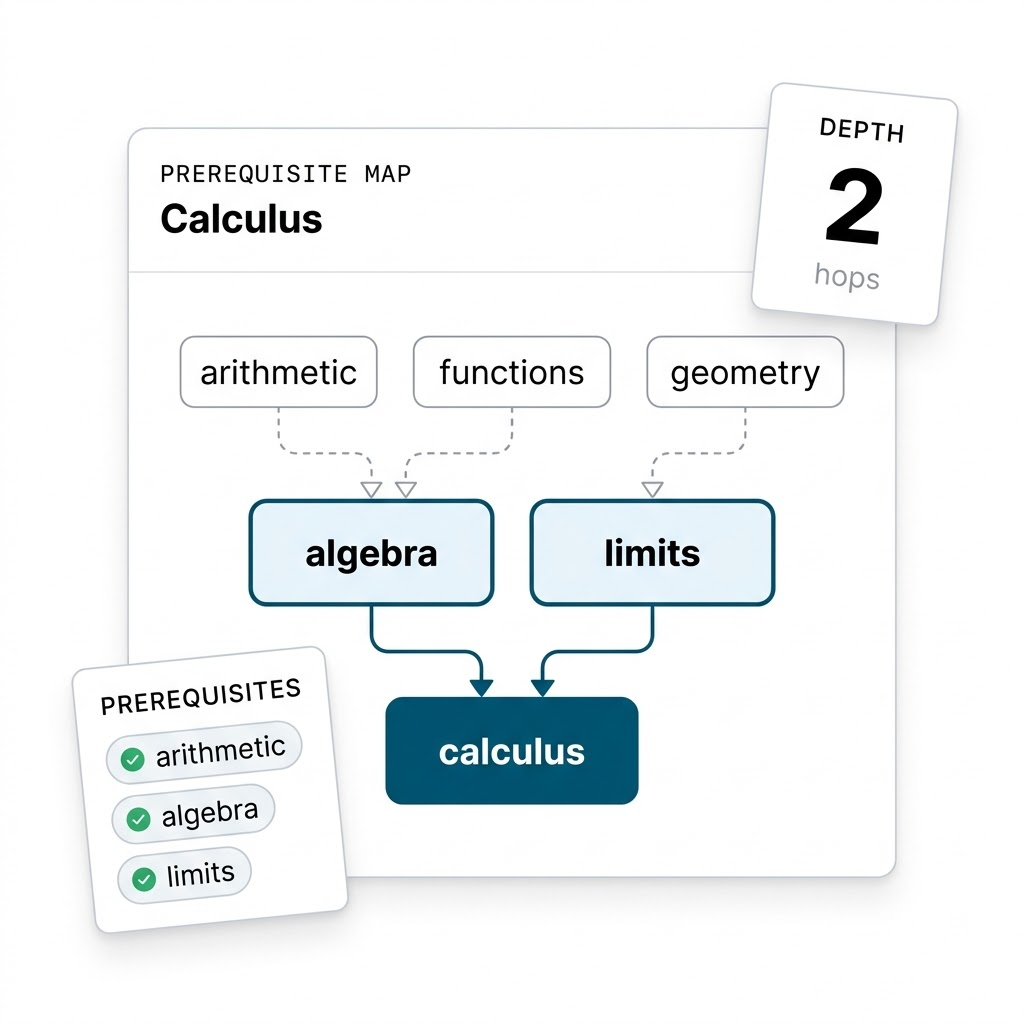
Calculus relies on the notion of a limit.
A limit is the value a function approaches as its input gets arbitrarily close to a point. edited
Formally: limx → a f(x) = L.
Reviewed by 3 domain experts
Calculus · last reviewed 2d ago · illustrative reviewers

Mathematics, Stanford · 2,300 reviews
"Clear, accurate intro. Limits section worth a 2-line expansion."

Applied Math, MIT · 980 reviews
"Prereq graph is correct. Approves as-is."

Mathematics Education, UC Berkeley · 540 reviews
"Reads well at beginner depth. Suggests one example."
Not just articles. Every concept page exposes its prerequisites, builds-toward edges, and reading depth, so you can stop guessing what to learn next.
Atomic. One page covers one idea.
Open. Every change ships as a public PR.
Verified. Domain experts sign off before merge.
Free forever. No paywall. No tiers. No ads on core content. Licensed in public under AGPL-3.0 + CC BY-SA 4.0.
Open to everyone. Reviewed at every step.
Knowledge as code
Built on tools anyone can read on day one.
No proprietary frameworks. The stack is chosen so any contributor can be productive without a week of onboarding.
// routes/concept.$slug.tsx
import { useQuery } from '@tanstack/react-query'
import { Route } from './route'

const { slug } = Route.useParams()
const { data: node } = useQuery({
  queryKey: ['concept', slug],
  queryFn: () => api.getConcept(slug),
})
Frontend. React + TypeScript on TanStack Router & Query. shadcn/ui on Tailwind. Type-safe routes, cache-aware data.
// src/routes/prereqs.ts (Hono · Workers)
app.get('/prereqs/:id', async (c) => {
  const { id } = c.req.param()
  const p = await walkGraph(c.env, id)
  return c.json(p)
})
Backend. Hono on Cloudflare Workers — a type-safe API at the edge, validated with Zod. Supabase handles data, auth, and row-level security.
Storage.
Supabase Postgres holds the typed guide_edges DAG. Recursive CTEs walk prereqs in a single query, with row-level security on every edit.
Phase 3 R&D
We're also exploring decentralized verification — bonus skills, not requirements.
Three phases. One graph.
The Core
Building the structural foundation and initial knowledge taxonomy.
- Data model execution
- Basic UI rendering
- Community seeding
Universal Access
Localization and widening the editorial pipeline.
- i18n structure
- Expert verification tools
- API formalization
Decentralization
Ensuring the graph relies on no single organization.
- Protocol extraction
- Self-hosting packages
- Independent mirrors
Join our open source community
~1,000 members on Discord. PRs welcome. Help build the prerequisite graph.
Phase 1 is open.
All code is too.
Read it. Build it. Share it. AGPL-3.0 — derivatives stay open.
"Encyclopedias tell you what something is. Bluelearn shows you what you need to know first."
Founding contributor
Bluelearn Project